Vegan Applesauce Cake with Maple-Pecan Apple Crunch
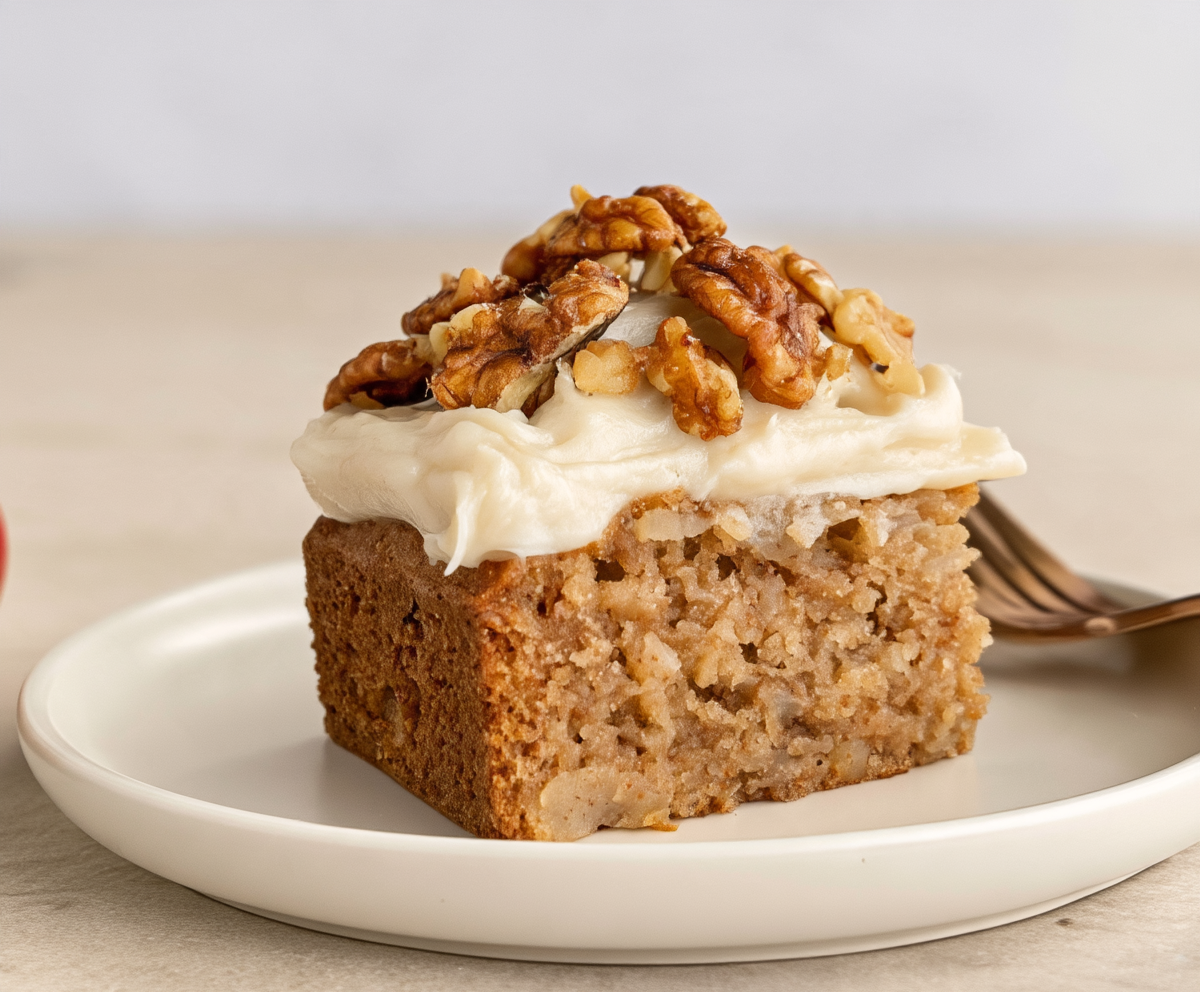
This vegan applesauce cake has a soft, moist crumb, warm spices, and just enough apple flavor to come through without tasting heavy. Applesauce keeps the cake tender, while brown sugar and cinnamon give it a deeper, cozy flavor.
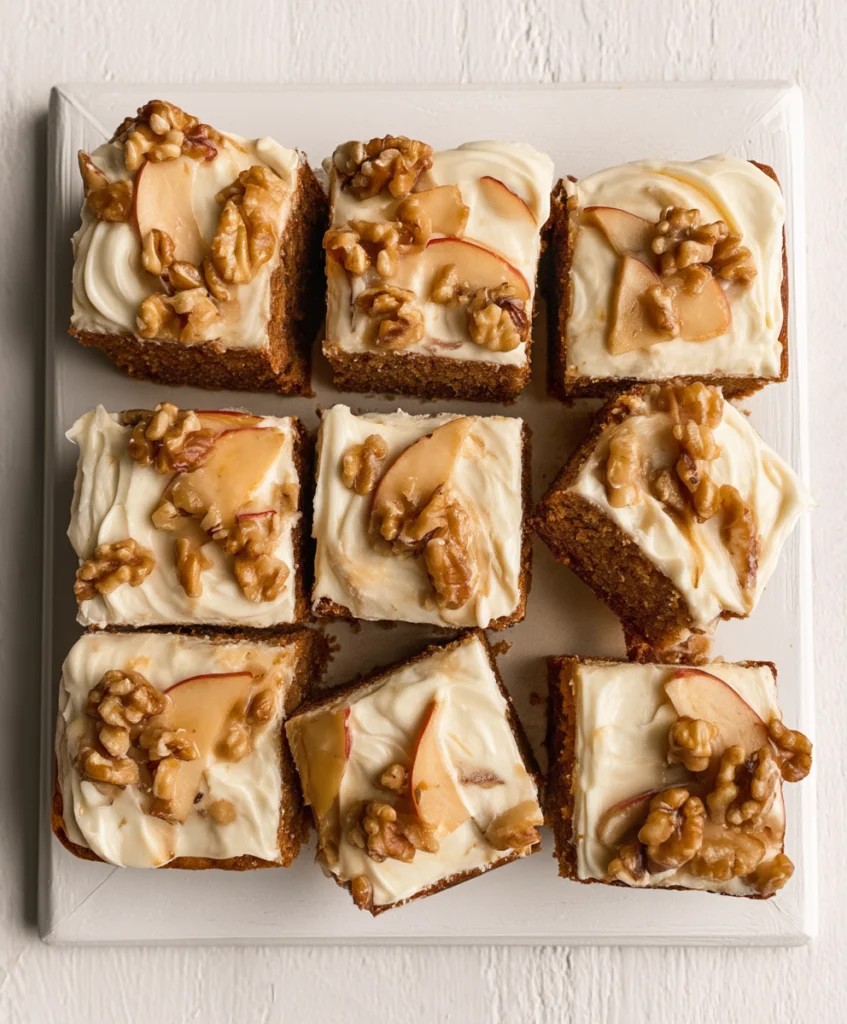
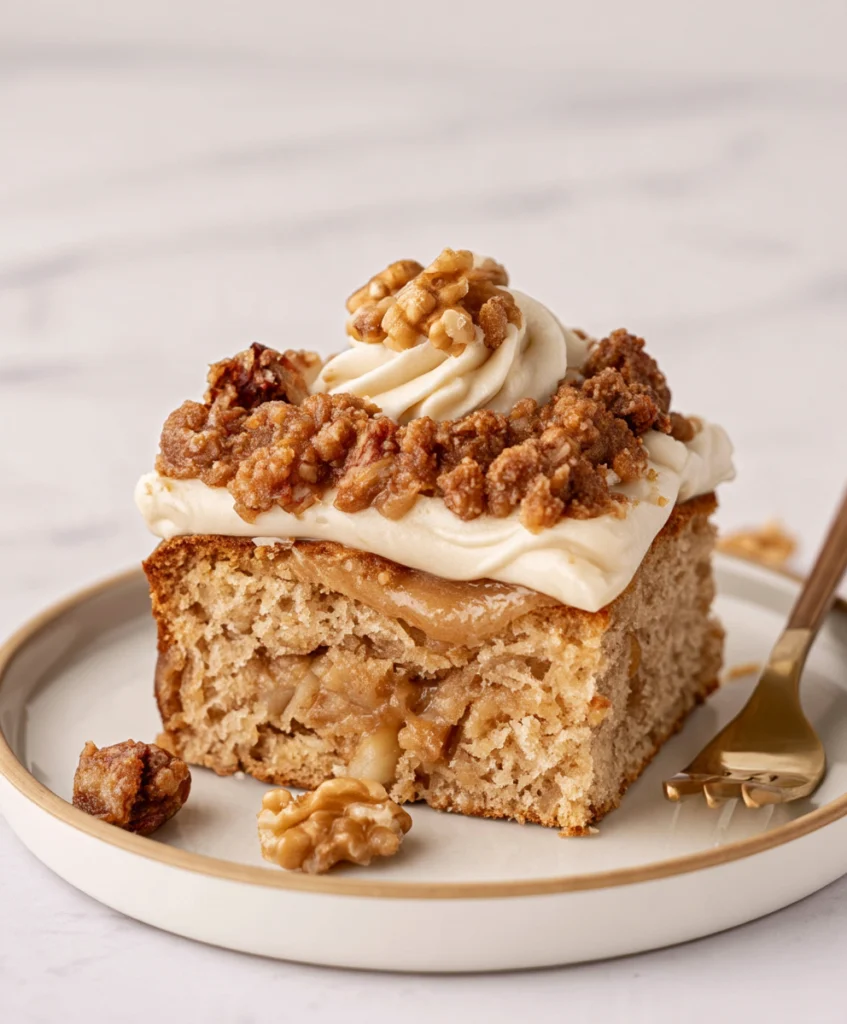
The part that makes this version stand out is the topping: maple-vanilla frosting, caramelized apples, and toasted pecans. You get a nice mix of creamy, soft, and crunchy textures in every slice.
The cake bakes in a straightforward 9 x 13-inch pan, so you do not need to deal with layers or elaborate decorating. For a more finished dessert, use the full topping, or keep things simple with a glaze or a light dusting of powdered sugar.
Why Applesauce Works So Well in This Vegan Cake
Applesauce gives this vegan cake moisture, mild apple flavor, and some of the binding you would normally get from eggs. It works especially well in a simple sheet cake because the batter does not need the same structure as a tall layer cake.
The important part is balance. Applesauce supplies moisture, but flour, leavening, and oil still provide the structure, lift, and tenderness needed for a soft cake that can be sliced cleanly.
Best Ingredients for Vegan Applesauce Cake
You do not need unusual ingredients for this cake, but a few choices make a noticeable difference in the final texture and flavor.
Unsweetened Applesauce
Use smooth, unsweetened applesauce so you can control the sweetness and moisture more easily. A very chunky or watery applesauce can change the batter consistency, so a standard smooth variety works best.
Room-temperature applesauce and dairy-free milk combine more evenly with the other ingredients.
Flour, Brown Sugar, and Warm Spices
All-purpose flour gives the cake enough structure to stay tender without becoming fragile.
Brown sugar adds moisture and a deeper caramel note, while cinnamon, ginger, and a little nutmeg or allspice bring out the apple flavor without overpowering it.
Oil and Dairy-Free Milk
A neutral oil keeps the crumb tender without adding a competing flavor. Dairy-free milk loosens the batter and helps everything blend into a smooth consistency.
Choose an unsweetened milk if you can, especially if the applesauce or frosting will already add plenty of sweetness.
Baking Powder, Baking Soda, and Acid
Using both baking powder and baking soda gives this moisture-rich batter the lift it needs. A small amount of vinegar or lemon juice provides acidity for the baking soda and helps the cake rise properly.
Accurate measuring matters here because too much or too little leavener can affect both rise and texture.
Maple-Pecan Apple Finish
For the topping, choose a firm apple that will soften without turning to mush, such as Honeycrisp, Pink Lady, or Granny Smith. The apples should stay distinct after cooking so the topping has some texture.
Maple adds warmth and sweetness to the frosting and apple topping, while toasted pecans bring a crisp contrast to the soft cake. A small pinch of salt helps balance the sweeter elements.
How to Make Vegan Applesauce Cake
Prepare the Pan and Oven
- Preheat the oven to 350°F.
- Prepare a 9 x 13-inch baking pan and line it with parchment if you want easier lifting and cleaner slices.
- Measure everything before you begin mixing so the batter can go into the oven without a long delay.
Combine the Dry Ingredients
- In a large bowl, whisk together the flour, granulated sugar, brown sugar, baking powder, baking soda, cinnamon, ginger, nutmeg, and salt.
- Break up any brown sugar or leavener lumps so the mixture is evenly combined.
Add the Wet Ingredients
- Add the applesauce, dairy-free milk, neutral oil, vanilla, and apple cider vinegar or lemon juice.
- Fold gently just until no dry flour remains.
- The batter should have a slightly thick consistency while still being easy to spread evenly in the pan.
- Stop mixing as soon as everything is combined.
Bake Until the Center Is Set
- Spread the batter evenly in the prepared pan, pushing it gently into the corners.
- Bake at 350°F for 32 to 38 minutes.
- The cake is ready when the center looks set, the top springs back lightly when touched, and a toothpick inserted near the middle comes out clean or with a few moist crumbs.
- If the tester comes out with wet batter, bake for a little longer and check again.
Cool the Cake Completely
- Let the cake sit in the pan briefly after removing it from the oven.
- Allow it to cool completely before adding any frosting or topping.
- Warm cake can melt the frosting and make the apple topping slide across the surface.
Make the Caramelized Cinnamon Apples
- Cut the apples into small, even pieces so they cook at the same rate.
- Cook them with cinnamon and maple syrup until tender but still holding their shape.
- Continue cooking until excess liquid reduces and lightly coats the apples instead of pooling in the pan.
- Allow the topping to cool fully before spooning it over the cake.
Prepare the Maple-Vanilla Frosting
- Beat the vegan butter until it becomes smooth and creamy.
- Gradually add the powdered sugar, mixing thoroughly after each addition.
- Stir in the maple syrup and vanilla until everything is fully incorporated.
- If the frosting is too thick, add the dairy-free milk a little at a time until it is easy to spread.
- The frosting should be soft enough to spread easily but firm enough to support the apple topping.
Frost and Finish the Cake
- Once the cake has cooled completely, spread the frosting evenly over the top.
- Spoon the cooled cinnamon apples evenly over the frosting.
- Scatter with toasted pecans.
- Drizzle over a small amount of the reduced apple-maple syrup, using just enough for flavor without soaking the frosting.
- Let the topping settle briefly before slicing.
How to Prevent a Dense or Gummy Applesauce Cake
- Too much flour: Scooping or packing flour into the measuring cup can make the cake dry and heavy. Spoon the flour into the cup, then level off the top instead.
- Extra applesauce: More applesauce means more moisture, which can leave the center overly soft or gummy.
- Overmixing: Once the flour is hydrated, continued stirring develops gluten and can make the crumb tougher.
- Underbaking: Applesauce keeps the crumb naturally moist, so judge the center rather than the browned edges. Wet batter on a tester means the cake needs more time.
Maple-Pecan Apple Topping Options
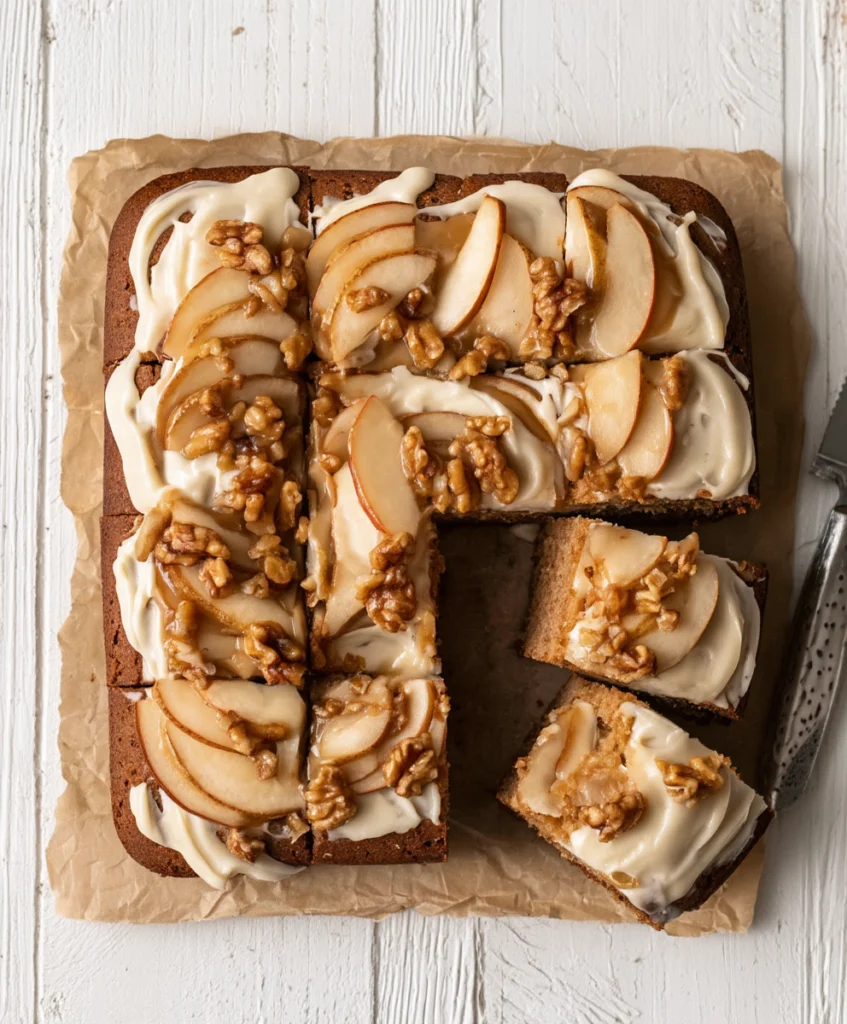
- Full signature finish: Spread the cake with maple-vanilla frosting, add the caramelized cinnamon apples, sprinkle over toasted pecans, and finish with a light drizzle of the reduced apple-maple syrup.
- Simpler finish: Use the maple-vanilla frosting and toasted pecans without the cooked apples.
- Light finish: Skip the frosting and use a thin maple glaze or a dusting of powdered sugar instead.
- Nut-free finish: Leave off the pecans and keep the caramelized apples with either the frosting or a simple glaze.
Substitutions and Variations
Gluten-Free Flour
A dependable 1-to-1 gluten-free baking flour formulated to replace all-purpose flour may work here, though the crumb and baking time can vary depending on the blend.
Avoid using a single flour such as almond flour or coconut flour as a direct swap because they absorb moisture very differently and would require a separate formula.
Homemade Applesauce
Homemade applesauce is fine as long as it is smooth and has a consistency similar to store-bought applesauce. If yours is very thin or watery, let it drain a little before measuring so you do not add extra moisture to the batter.
If the applesauce is already sweetened, expect the finished cake to taste sweeter.
Replacing the Oil
You can use extra applesauce in place of some of the oil, but the cake’s texture will change. It will generally be softer, denser, and less rich.
For the intended crumb, I would keep at least some of the oil rather than replacing it all.
Add-Ins
A few simple additions work well as long as you keep them moderate:
- Chopped pecans or walnuts for extra crunch
- Raisins for a more traditional spiced-cake feel
- A small handful of dairy-free chocolate chips for a sweeter variation
Avoid adding a large amount of fresh fruit directly to the batter. Extra juicy ingredients can throw off the moisture balance and make the center harder to bake through.
Different Baking Pans
You can bake the batter in another pan, but a change in pan size or shape will also change the baking time. A deeper cake will generally need longer, while a shallower layer may bake more quickly.
Instead of relying on the 9 x 13-inch timing, watch for the same doneness cues: a set center, a lightly springy top, and a toothpick that comes out clean or with a few moist crumbs.
How to Store Vegan Applesauce Cake
Unfrosted Cake
Once the cake is fully cooled, cover it tightly and store it at room temperature for a short period. For longer storage, wrap the unfrosted cake well and freeze it without the apple topping.
When you are ready to serve it, thaw the cake while still wrapped so condensation forms on the wrapping rather than directly on the crumb.
Frosted Cake
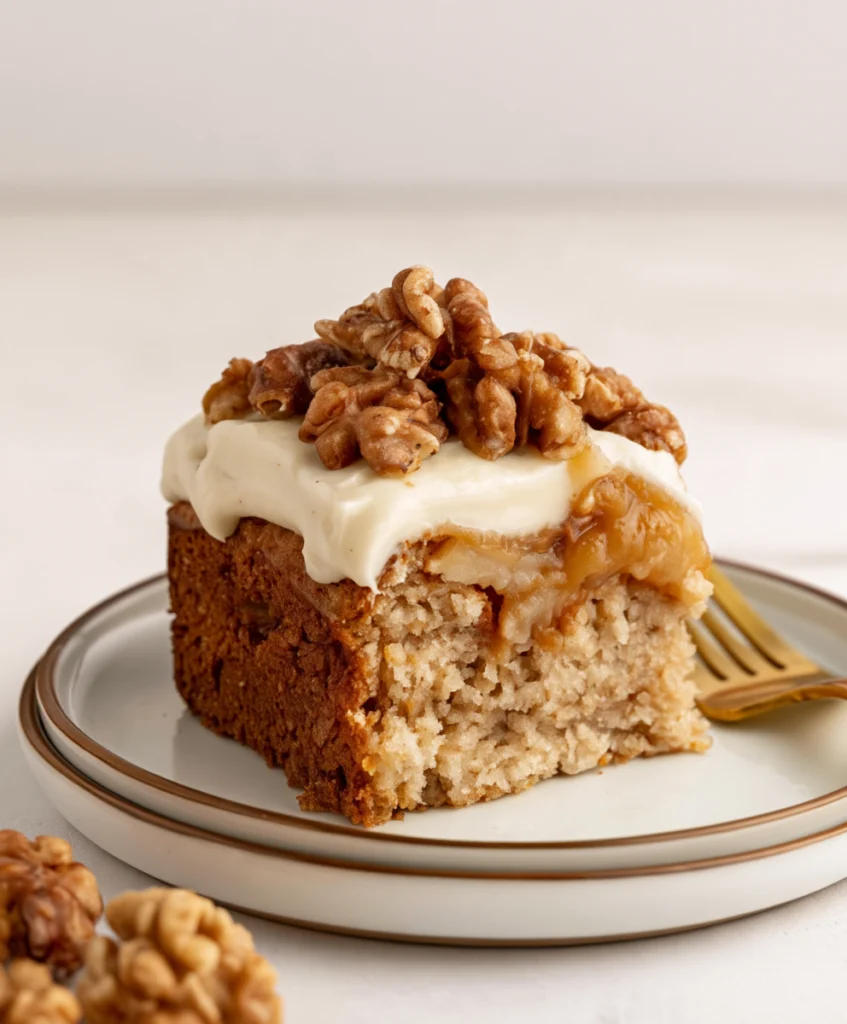
Once the cake is topped with frosting and cooked apples, store it covered in the refrigerator.
For the best texture, let each slice rest at room temperature for a short time before serving. As it warms up slightly, the crumb and frosting will both become softer.
Make-Ahead Option
You can bake the cake a day ahead and keep it unfrosted until you are ready to assemble it. Store the cooled cake well covered, and refrigerate the caramelized apples separately.
Add the frosting, apples, pecans, and drizzle once everything is fully cool.
Frequently Asked Questions
Can I use sweetened applesauce?
Yes, you can use sweetened applesauce, but the cake will come out sweeter. Unsweetened applesauce makes it easier to control the overall sweetness, especially because the frosting and apple topping already contribute extra sugar.
Avoid automatically reducing the sugar in the batter, since sugar also affects moisture and tenderness.
Why did my applesauce cake sink in the middle?
If the center sinks, the cake may not have baked all the way through. Opening the oven too soon can also cause the middle to collapse before the structure has set, and incorrect amounts of baking powder or baking soda can interfere with the rise.
Using a smaller or deeper pan than the recipe calls for may also leave the center underdone even when the edges look ready.
Can I make this cake without frosting?
Yes. You can leave the cake plain, add a light dusting of powdered sugar, or top it with a thin maple glaze.
The cake itself already has plenty of moisture and spice, so frosting is not essential if you want something simpler.
What type of applesauce is best for applesauce cake?
For the most consistent results, use smooth, unsweetened applesauce because it adds moisture without increasing the sweetness. If you use homemade applesauce, keep it close to the consistency of store-bought applesauce rather than using a thin or watery purée.
Vegan Applesauce Cake with Maple-Pecan Apple Crunch
Ingredients
Equipment
Method
- Preheat the oven to 350°F. Grease a 9 x 13-inch baking pan or line it with parchment paper.
- In a large mixing bowl, whisk together the flour, granulated sugar, brown sugar, baking powder, baking soda, cinnamon, ginger, nutmeg, and salt. Break up any brown sugar or leavener lumps.
- Add the applesauce, dairy-free milk, oil, apple cider vinegar or lemon juice, and vanilla.
- Fold everything together gently just until no dry pockets of flour remain. Do not keep mixing once the ingredients are combined.
- Transfer the batter to the prepared pan and spread it evenly into the corners.
- Bake for 32 to 38 minutes, checking around the 32-minute mark. The cake is done when the center is set, the top springs back lightly, and a toothpick inserted near the middle comes out clean or with a few moist crumbs.
- Place the pan on a wire rack and let the cake cool completely before frosting.
- While the cake cools, melt the vegan butter for the apple topping in a skillet over medium heat.
- Add the diced apples, maple syrup, cinnamon, and a pinch of salt.
- Cook for about 6 to 9 minutes, stirring occasionally, until the apples are tender but still hold their shape.
- Continue cooking briefly if there is excess liquid. The remaining syrup should lightly coat the apples rather than pool around them.
- Transfer the apples to a bowl and let them cool completely.
- Add the chopped pecans to a dry skillet over medium-low heat.
- Toast for about 3 to 5 minutes, stirring frequently, until fragrant and lightly browned. Remove them from the pan immediately. Add a pinch of salt if desired.
- Beat the softened vegan butter for the frosting until smooth and creamy.
- Gradually add the powdered sugar, beating until combined.
- Add the maple syrup, vanilla, and a pinch of salt. Beat until smooth and fluffy.
- If the frosting is too firm, add dairy-free milk 1 tablespoon at a time. If it becomes too soft, beat in a little more powdered sugar.
- Spread the maple frosting evenly over the completely cooled cake.
- Spoon the cooled caramelized apples over the frosting, leaving behind any large amount of thin liquid that may remain in the bowl.
- Sprinkle with the toasted pecans.
- If the apple pan contains a small amount of thick, syrupy liquid, drizzle a little over the cake.
- Slice into 12 servings and serve.
Notes
-
- Spoon flour into the measuring cup and level it rather than scooping directly from the container.
- Use smooth, unsweetened applesauce for the most predictable moisture level.
- Do not overmix once the wet and dry ingredients come together.
- Do not replace all of the oil with extra applesauce if you want the intended tender crumb.
- Cool both the cake and cooked apples completely before assembling.
- For a nut-free version, omit the pecans.
- For a simpler finish, skip the caramelized apples and pecans and use only the maple frosting, a thin maple glaze, or a light dusting of powdered sugar.
- A 1-to-1 gluten-free baking flour designed to replace all-purpose flour may work, but the texture and baking time can vary depending on the blend.
Storage
Store the unfrosted cake tightly covered at room temperature for short-term storage. Once topped with frosting and caramelized apples, keep the cake covered in the refrigerator. Let individual slices sit at room temperature briefly before serving for a softer texture. The unfrosted cake can be wrapped well and frozen for up to 1 month. Thaw it while still wrapped, then frost and decorate once it reaches room temperature.