
Creamy Sun-Dried Tomato Vegan Pasta
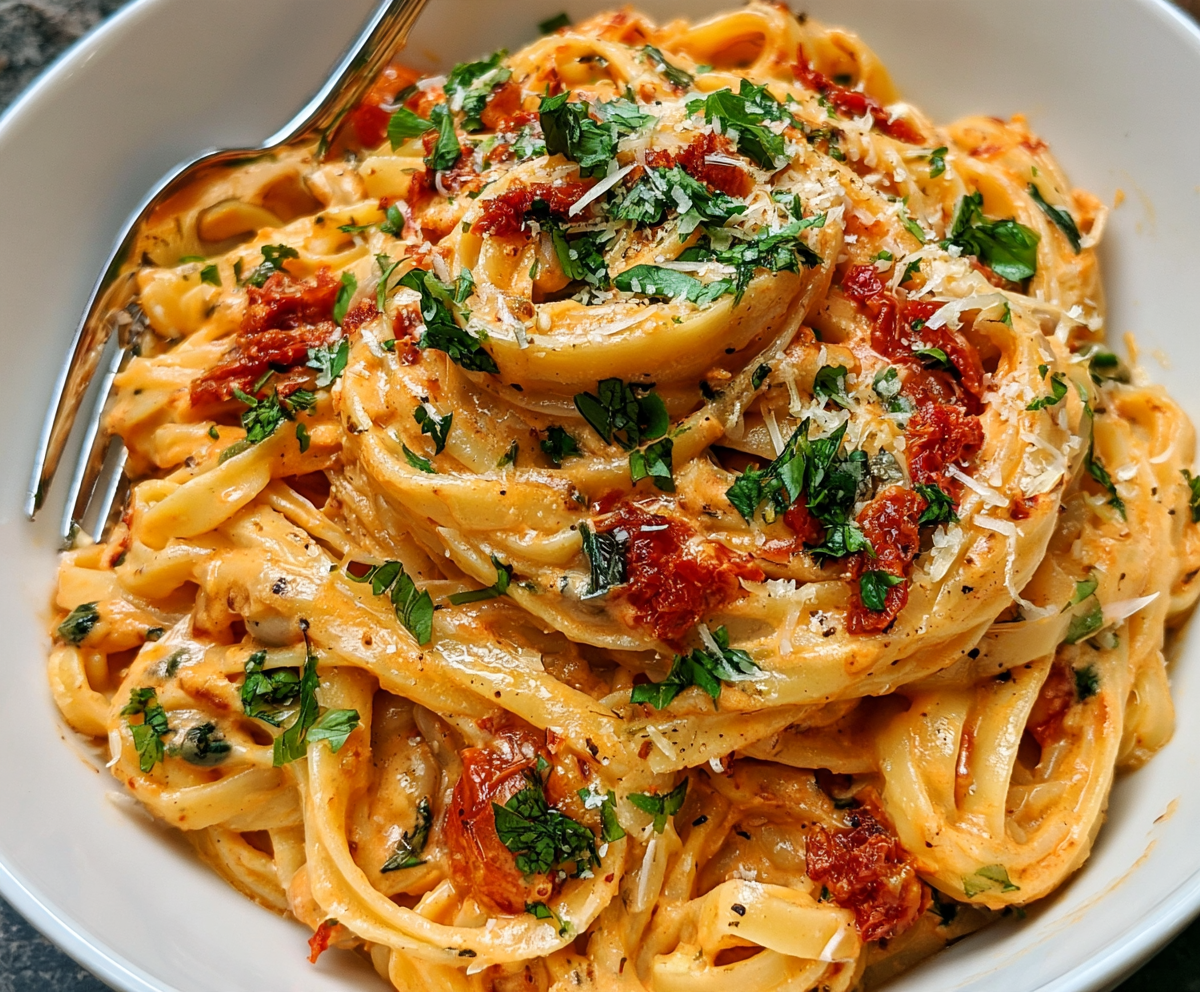
This creamy sun-dried tomato vegan pasta pairs tender pasta with a smooth dairy-free sauce, savory garlic, sweet-tangy sun-dried tomatoes, fresh basil, and spinach. The tomatoes bring plenty of concentrated flavor, so you get a rich pasta sauce without needing a long list of seasonings.
The sauce gets its creaminess from unsweetened non-dairy milk and tahini, with lemon juice to brighten the richer flavors. I like using oil-packed sun-dried tomatoes here because they’re already tender and blend easily into the sauce. A little of the flavorful oil from the jar can also be used for sautéing the onion and garlic.
This recipe makes 6 servings and comes together entirely on the stovetop, making it practical for a weeknight dinner. The sauce is easy to adjust as you toss it with the pasta, so you can keep it silky rather than overly thick.
Why You’ll Love This Pasta
- Creamy without dairy: Non-dairy milk and tahini create a smooth, rich sauce without heavy cream or cheese.
- Plenty of sun-dried tomato flavor: Blending some of the tomatoes into the sauce spreads their sweet, tangy flavor through every bite instead of leaving it only in scattered pieces.
- Simple stovetop cooking: The pasta cooks separately while the sauce comes together in a skillet and blender, so there’s no baking or complicated prep.
- Freshness balances the rich sauce: Basil, spinach, and lemon juice keep the pasta from tasting overly heavy.
- Easy to adapt: You can change the pasta, level of heat, or a few add-ins while keeping the creamy sun-dried tomato sauce at the center of the dish.
Ingredients for Creamy Sun-Dried Tomato Pasta
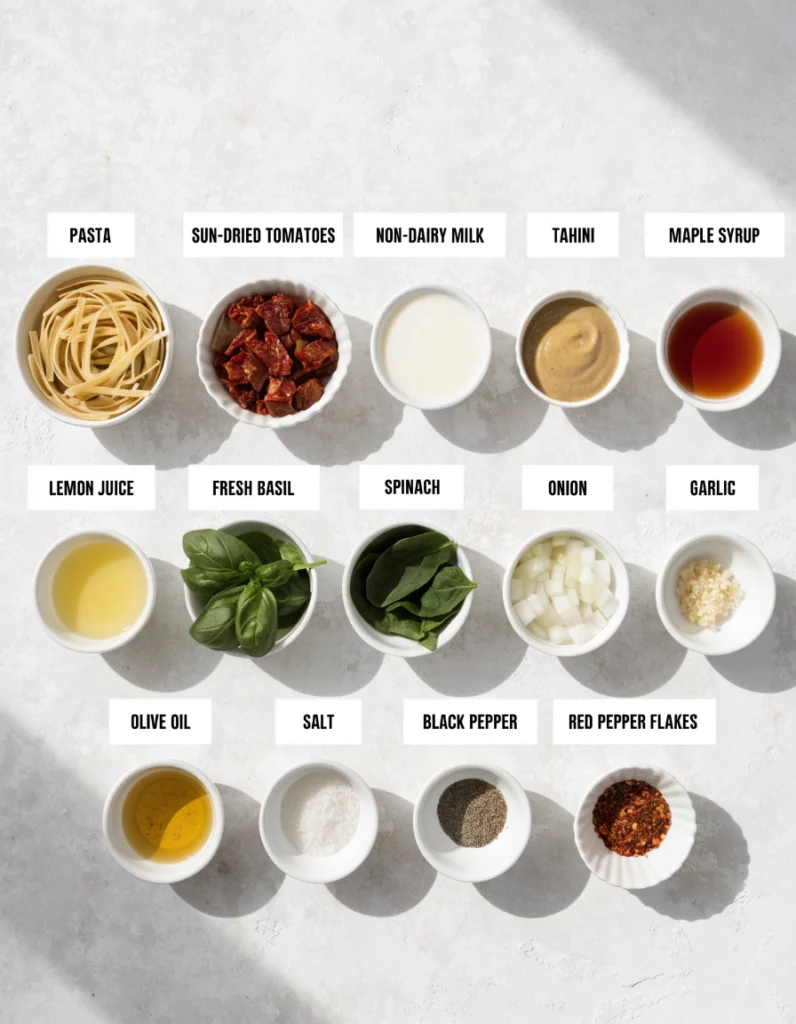
You’ll find the exact amounts in the recipe card. These are the ingredients where your choice or preparation can make a noticeable difference in the finished pasta.
Oil-Packed vs. Dry Sun-Dried Tomatoes
Oil-packed sun-dried tomatoes work especially well in this recipe because they’re tender, full of flavor, and blend smoothly into the creamy sauce. Drain the tomatoes before measuring them, but hold on to some of the oil from the jar. You can use it to sauté the onion and garlic, adding even more tomato flavor to the sauce.
Dry-packed sun-dried tomatoes can work, but they’re much chewier. Soak them in hot water until softened, then drain well before using.
Choosing the Dairy-Free Creamy Base
Use plain, unsweetened non-dairy milk so you don’t introduce unwanted sweetness or vanilla flavor. Soy milk is a good choice because it has enough body for a creamy sauce, while unsweetened almond milk also works if you prefer something lighter.
Tahini adds richness and helps give the sauce more body. Its slightly nutty flavor also works well with the tomatoes and lemon without making the pasta taste strongly of sesame.
Pasta, Garlic, and Finishing Ingredients
Long pasta such as spaghetti or linguine works especially well because the blended sauce coats the strands evenly. Short shapes such as penne or rotini are also good options if that’s what you have.
Fresh garlic and onion form the savory base, while spinach wilts into the pasta at the end without needing separate cooking. Fresh basil is best added near serving time so its flavor stays bright rather than getting lost in the hot sauce.
How to Make Creamy Sun-Dried Tomato Vegan Pasta
- Cook the pasta. Bring a large pot of well-salted water to a boil and cook the pasta until al dente, following the package timing as a guide. Before draining, scoop out about 1 cup of the starchy pasta water and set it aside.
- Build the flavor base. While the pasta cooks, heat the olive oil—or some of the reserved sun-dried tomato oil—in a large 12-inch deep skillet or Dutch oven over medium heat. Add the diced onion and cook for 3–4 minutes, until softened and starting to look translucent. Stir in the garlic and cook for about 30–60 seconds, stirring constantly, just until fragrant. Don’t let it brown.
- Blend the creamy sauce. Transfer the cooked onion and garlic to a blender. Add the sun-dried tomatoes, unsweetened non-dairy milk, tahini, lemon juice, maple syrup, basil, salt, black pepper, and red pepper flakes. Blend until smooth and creamy. The sauce should be pourable rather than thick like a dip.
- Combine the sauce and pasta. Pour the blended sauce into the skillet and warm it gently over medium-low heat. Add the drained pasta and toss until every strand is coated. If the sauce feels too thick, add the reserved pasta water a few tablespoons at a time until it becomes silky and clings easily to the pasta.
- Finish with the spinach. Add the spinach and toss over low heat just until it wilts. Taste and adjust the salt, pepper, and red pepper flakes. If the tomatoes taste particularly sharp or acidic, add some or all of the remaining maple syrup as needed. The sauce should still look slightly loose when you take the skillet off the heat since it will continue to thicken as it sits. Finish with fresh basil and vegan Parmesan, if using, and serve warm.
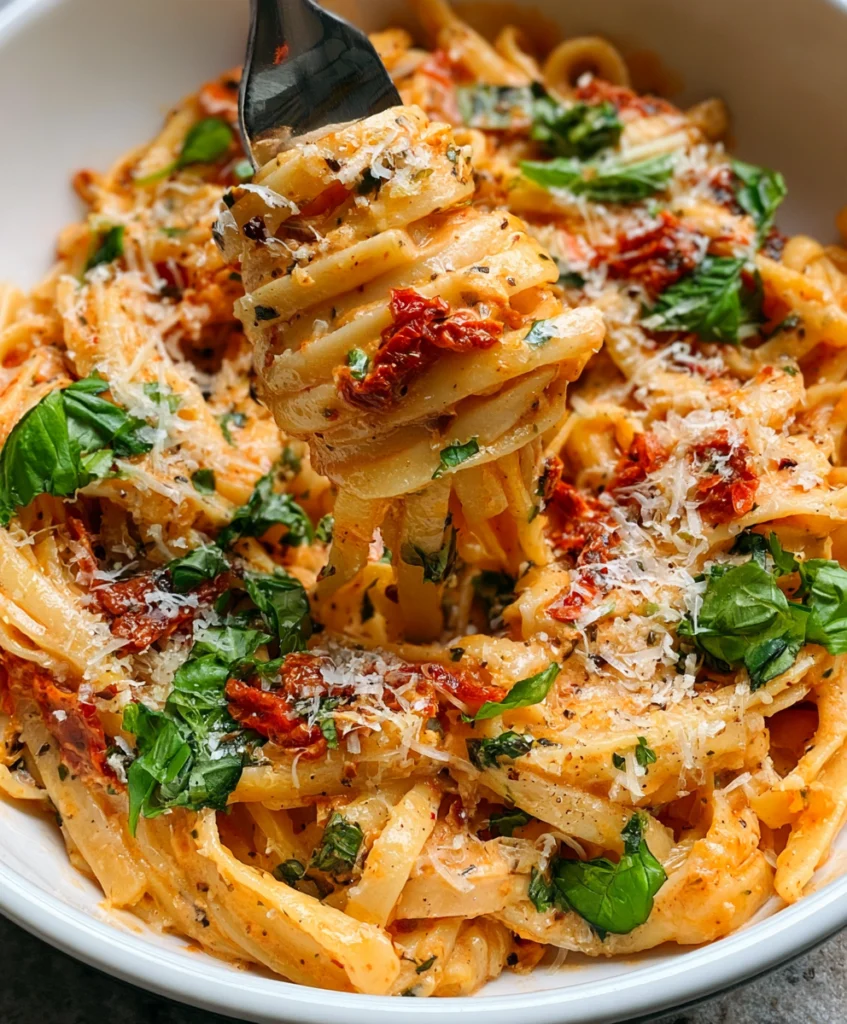
Tips for Creamy Vegan Pasta Sauce
- Keep the heat gentle once the sauce is blended. Medium-low heat is enough to warm it through. A hard simmer can make a dairy-free sauce thicken faster than you expect.
- Aim for a slightly loose finish. The tahini and pasta will continue absorbing moisture after you turn off the heat. If the sauce looks perfectly thick in the skillet, it may become too heavy by the time you serve it.
- Taste before adding more sweetness. Sun-dried tomatoes vary in acidity, and some non-dairy milks taste naturally sweeter than others. Start conservatively with the maple syrup and add more only if the sauce needs its acidity balanced.
Substitutions and Variations
Make It Gluten-Free
Use your favorite gluten-free spaghetti, linguine, or short pasta in place of regular pasta. Check it a little earlier than the package suggests, since some gluten-free varieties can go from firm to overly soft quickly.
Dairy-Free Cream Alternatives
If you don’t want to use soy or almond milk, plain unsweetened oat milk is another option and gives the sauce a slightly fuller consistency. Choose one without added vanilla or sweetener.
For the tahini, unsweetened cashew butter is a useful substitute when sesame is an issue. It has a milder flavor while still providing the richness and body the sauce needs.
Add Vegetables or Plant-Based Protein
Keep additions fairly simple so the sun-dried tomato sauce remains the focus. Sautéed mushrooms, broccoli, or zucchini work well, but cook them before combining them with the finished pasta so they don’t release excess water into the sauce.
For extra protein, add cooked chickpeas or white beans when you combine the pasta and sauce. They only need enough time to heat through.
Adjust the Heat
For gentle heat in the background, begin with a small pinch of red pepper flakes and add more to taste if you prefer a spicier sauce. Blending the flakes directly into the sauce spreads the heat evenly throughout, so you don’t end up with unexpectedly spicy bites.
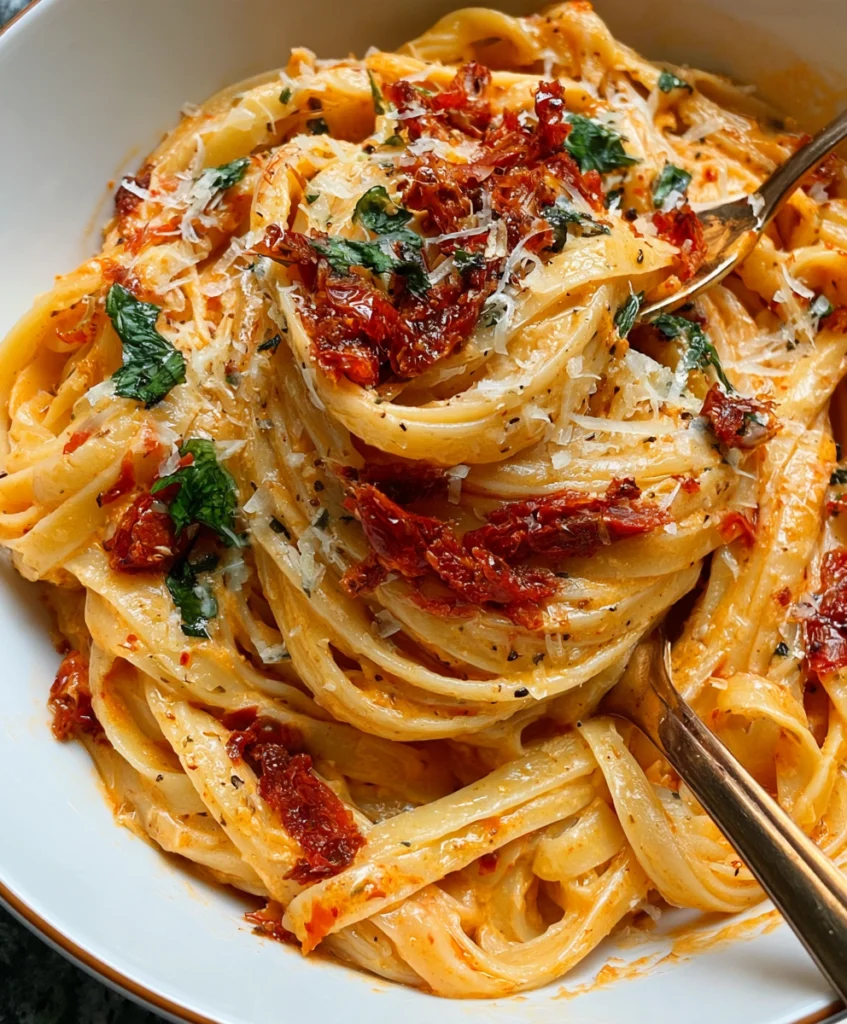
Storing and Reheating Leftovers
Refrigerating
Let leftover pasta cool, then transfer it to an airtight container and refrigerate it for up to 4 days. The sauce will become noticeably thicker as it chills because the pasta continues to absorb moisture.
Reheating Without Drying Out the Pasta
Reheat the pasta gently in a skillet over medium-low heat, adding a small splash of unsweetened non-dairy milk or water to loosen the sauce. Stir frequently and add a little more liquid only if needed.
You can also microwave individual portions in short intervals, stirring between each one. The pasta is ready when it’s heated through and the sauce once again looks creamy enough to coat the noodles rather than sitting thickly around them.
Frequently Asked Questions
Can I make the sauce ahead of time?
Yes. Prepare the sauce, let it cool, and refrigerate it in an airtight container for up to 3 days. For the best texture, keep it separate from the cooked pasta. Warm the sauce gently and thin it with a splash of unsweetened non-dairy milk or water before tossing it with freshly cooked pasta.
Why is my sauce too thick?
The pasta may have absorbed more liquid than expected, or the sauce may have reduced too much while heating. Stir in a small amount of warm pasta water or unsweetened non-dairy milk until the sauce loosens and coats the noodles smoothly.
Can I freeze creamy sun-dried tomato pasta?
You can freeze this pasta, although refrigeration is the better option when possible. Cooked pasta can become softer after it’s frozen and thawed, and the creamy sauce may not retain the same smooth texture.
For the best results, freeze the sauce separately from the pasta. Let it thaw overnight in the refrigerator, then reheat it gently, stirring as it warms. If needed, add a splash of non-dairy milk to bring the sauce back to the right consistency.
Creamy Sun-Dried Tomato Vegan Pasta
Ingredients
Equipment
Method
- Cook the pasta. Bring a large pot of salted water to a boil. Add the pasta and cook until al dente according to the package directions. Before draining, reserve about 1 cup of the starchy pasta water. Drain the pasta and set aside.
- Cook the onion. While the pasta cooks, heat the olive oil or reserved sun-dried tomato oil in a large 12-inch deep skillet or Dutch oven over medium heat. Add the diced onion and cook for 3–4 minutes, stirring occasionally, until softened and translucent.
- Add the garlic. Stir in the minced garlic and cook for about 30–60 seconds, stirring constantly, just until fragrant. Don’t let the garlic brown.
- Blend the sauce. Transfer the cooked onion and garlic to a blender. Add the sun-dried tomatoes, non-dairy milk, maple syrup, lemon juice, tahini, basil, salt, black pepper, and red pepper flakes. Blend until smooth and creamy. The sauce should be pourable rather than thick like a dip.
- Combine the pasta and sauce. Pour the blended sauce back into the skillet and warm it gently over medium-low heat. Add the drained pasta and toss until evenly coated. Add the reserved pasta water a few tablespoons at a time as needed, until the sauce is silky and easily coats the pasta.
- Add the spinach. Add the spinach and toss over low heat just until wilted. Taste and adjust the salt, black pepper, and red pepper flakes as needed.
- Serve. Remove the skillet from the heat while the sauce is still slightly loose, since it will continue to thicken as it sits. Serve warm with extra fresh basil and vegan Parmesan, if desired.
Notes
- Sun-dried tomatoes: Oil-packed sun-dried tomatoes are recommended because they’re softer and blend easily into the sauce. If using dry-packed tomatoes, soften them in hot water first, then drain well.
- Non-dairy milk: Use plain, unsweetened non-dairy milk. Soy, almond, or oat milk can work, but avoid sweetened or flavored varieties.
- Sauce consistency: The sauce will thicken as it sits. If it becomes too thick, stir in a little reserved pasta water or unsweetened non-dairy milk until creamy again.
- Storage: Store leftover pasta in an airtight container in the refrigerator for up to 4 days.
- Reheating: Reheat gently over medium-low heat with a splash of non-dairy milk or water to loosen the sauce.
One Comment