
Vegan Chocolate Brownie Cookies
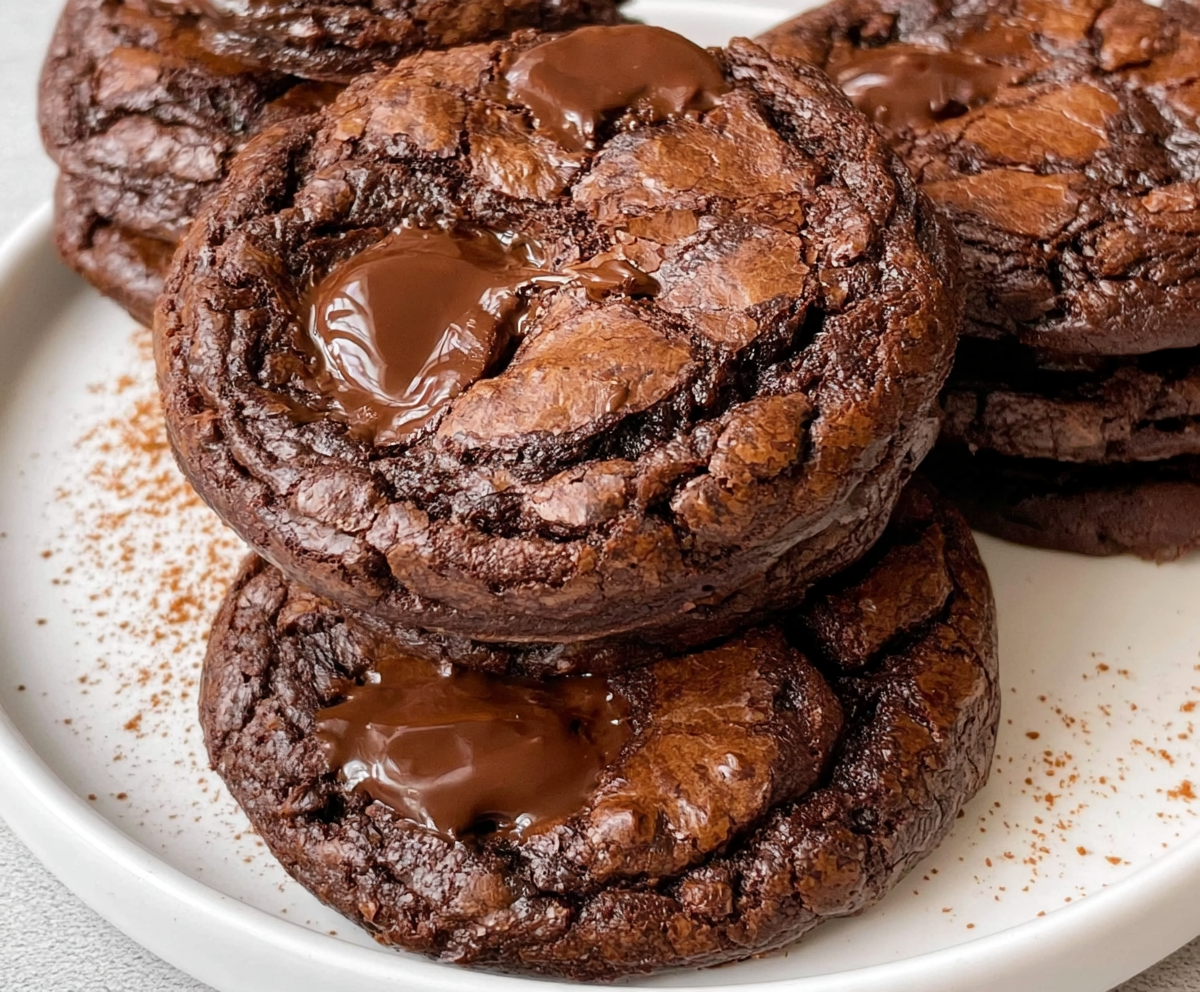
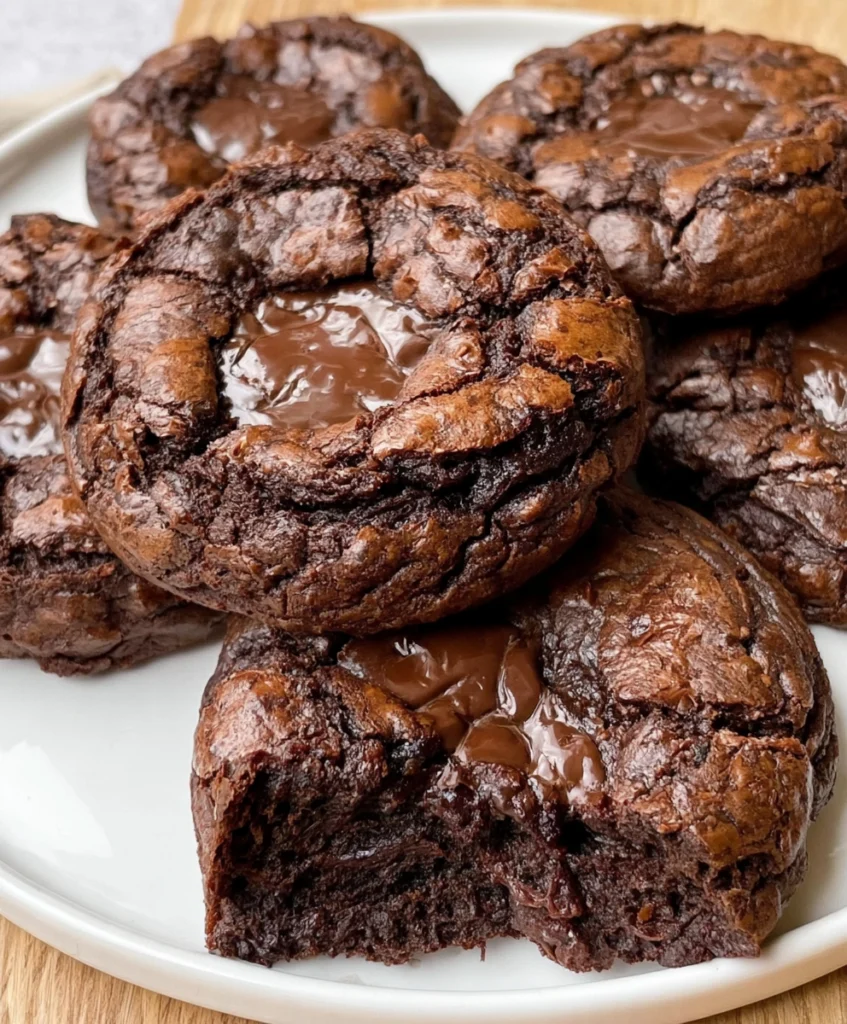
These vegan chocolate brownie cookies bring two favorite textures together: the rich, soft center of a brownie and the easy-to-eat shape of a cookie. They bake with thin, crackly tops, tender fudgy centers, and a deep dark-chocolate flavor.
A teaspoon of instant espresso powder gives this version a little something extra. You won’t need enough to make the cookies taste like coffee; it’s there to deepen the cocoa and dark chocolate, giving them a fuller chocolate flavor without changing the texture of the batter.
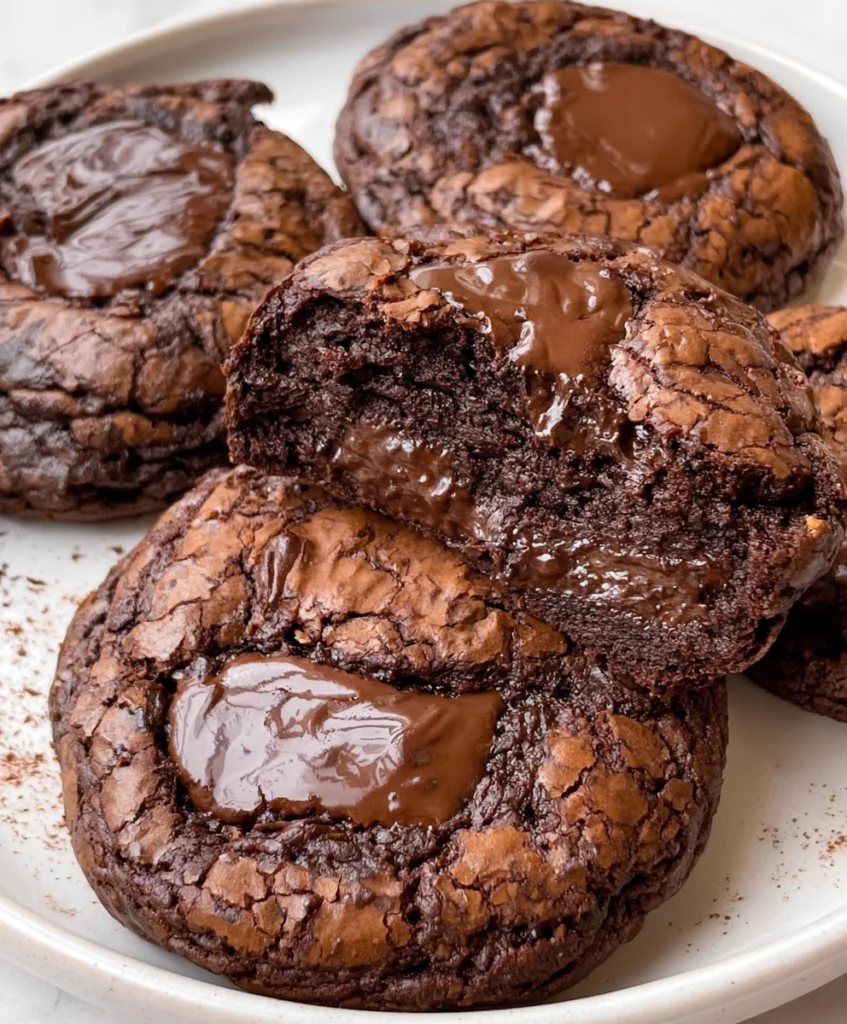
The method is a little different from a standard cookie dough, and those details matter. Dissolving the sugar, working with the chocolate mixture while it’s warm, and getting the cookies out of the oven while their centers are still soft all help create that brownie-like finish. They’ll continue to set as they cool, so you get a fudgy center instead of a dry, cakey one.
Ingredients and What Matters Most
You don’t need unusual egg replacers to make these brownie cookies work. The combination of melted chocolate, oil, dissolved sugar, and flour creates the structure, while cocoa and espresso build a deeper chocolate flavor. Exact amounts are saved for the recipe card.
Chocolate and Cocoa Powder
Use a good-quality vegan dark chocolate that melts smoothly. Dark chocolate provides both flavor and richness, but it also contributes to the structure of the cookies as they cool. Check the label if needed, since some dark chocolate contains milk ingredients.
Unsweetened cocoa powder reinforces the chocolate flavor without adding more melted chocolate or fat. Spoon it into the measuring cup rather than packing it down, and break up any obvious lumps before mixing.
The instant espresso powder is a small addition, but it has a purpose. It deepens the cocoa and dark chocolate notes without making the finished cookies noticeably coffee-flavored.
Sugar and Fat
Superfine or caster sugar is especially useful here because the fine crystals dissolve readily in warm water. That dissolved sugar is an important part of the brownie-cookie texture and helps create the characteristic thin, crackly surface.
A neutral sunflower oil supplies the fat without adding a competing flavor. Another neutral-tasting oil can work, but strongly flavored oils can noticeably change the finished cookies.
Flour and Leavening
All-purpose flour gives the cookies enough structure to hold together while leaving the centers soft. Measure it carefully: too much flour can reduce spreading and push the texture from fudgy toward cakey.
A small amount of baking powder provides just enough lift for the cookies to puff as they bake without turning them into cake-like chocolate cookies. Salt balances the sweetness and sharpens the chocolate flavor.
- Prepare the oven and baking sheets. Preheat the oven to 355°F and line two large baking sheets with parchment paper. Have your ingredients measured before you begin.
- Melt the chocolate with the oil. Place the dark chocolate and sunflower oil in a heatproof bowl. Melt them gently over a pan of barely simmering water, stirring occasionally, until completely smooth. Remove the bowl from the heat and set it aside briefly.
- Dissolve the sugar. Combine the caster sugar and water in a small saucepan. Warm over medium-low heat, stirring until the sugar has completely dissolved and the liquid looks clear rather than grainy. You’re dissolving the sugar, not cooking it into caramel.
- Combine the warm mixtures. Pour the warm sugar syrup into the melted chocolate and whisk until the mixture is smooth, glossy, and evenly combined.
- Add the dry ingredients. In a separate bowl, whisk together the all-purpose flour, cocoa powder, baking powder, salt, and instant espresso powder. Add them to the chocolate mixture and whisk just until no dry pockets remain. The batter should be thick and glossy but still soft enough to scoop; it won’t look like a firm traditional cookie dough.
- Portion right away. Scoop about 2 tablespoons of batter per cookie onto the prepared baking sheets, making 16 cookies total. Leave roughly 2 inches between them so they have room to spread.
- Bake until crackly but still soft. Bake for about 9–10 minutes, or until the cookies have spread, puffed slightly, and developed thin, crackled tops. The edges should look set, but the centers should still be soft.
- Shape them while hot, if needed. If a cookie has spread unevenly, gently nudge its edges into a round shape immediately after it comes out of the oven. This is easiest while the cookies are still very soft.
- Let the centers finish setting. Leave the cookies on the baking sheets for 5–10 minutes. Once they can be moved without bending or breaking, transfer them carefully to a wire rack.
How to Get Fudgy Centers and Crackly Tops
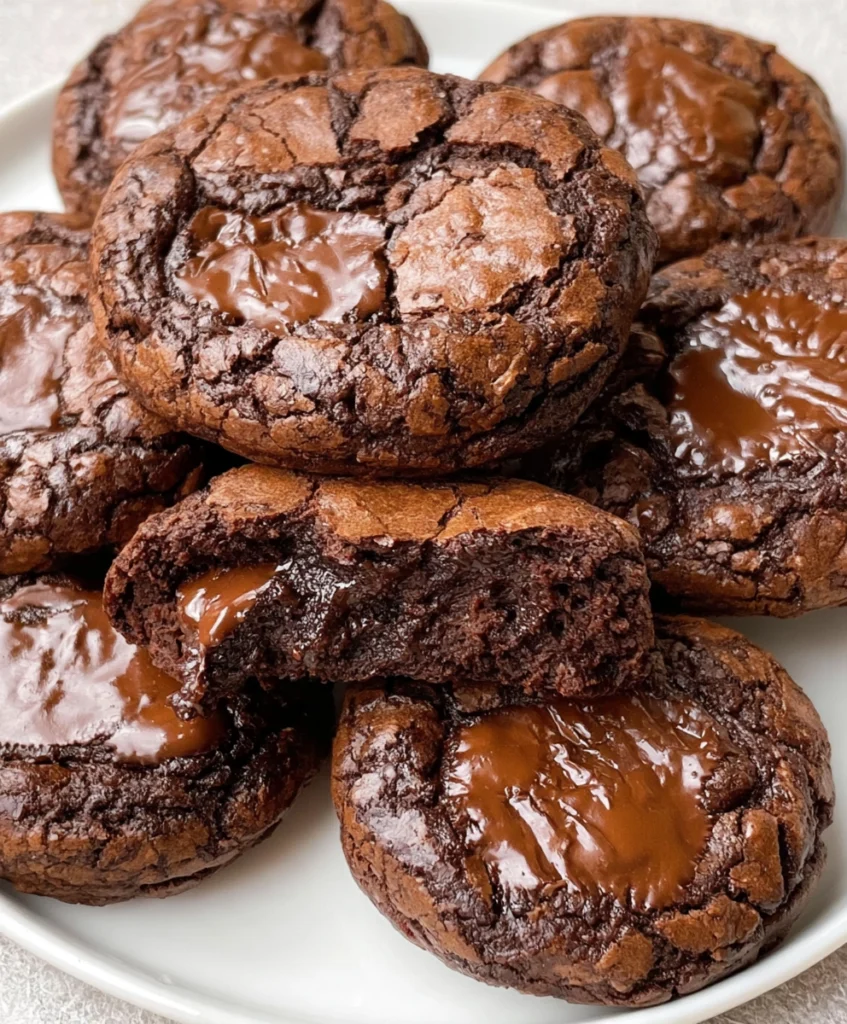
The contrast between a delicate crackled surface and a soft center is what makes these feel more like brownies than ordinary chocolate cookies. Three details have the biggest effect on that texture.
Build the Right Brownie-Like Texture
These cookies rely on melted dark chocolate, oil, dissolved sugar, and a restrained amount of flour for their rich, dense centers. Together, those ingredients create a softer, glossier batter than you would expect from traditional cookie dough.
Don’t try to turn it into a firm cookie dough by changing the ingredient balance. The softer consistency is part of what allows the cookies to spread and develop their brownie-like texture.
What Creates the Crackly Top
Dissolving the caster sugar in water before combining it with the chocolate is particularly important. The dissolved sugar helps create that thin surface layer that sets and cracks as the cookies expand in the oven.
This batter is also designed to be portioned while it is still warm rather than rested like conventional cookie dough.
The Importance of Carryover Baking
Brownie cookies can look deceptively underdone when they’re actually ready. Residual heat continues cooking the soft centers while the cookies sit on the hot baking sheet.
That short setting period also makes the cookies easier to handle. Move them immediately and their soft centers may bend or break; after setting, they’ll have enough structure to transfer more easily.
Brownie-cookie batter is more sensitive than standard cookie dough, so small changes in measurement, temperature, or timing can show up in the finished cookies.
Why Didn’t My Cookies Spread?
Using too much flour is a common reason for this. The batter needs a relatively small amount of flour to maintain its fudgy texture, so even a slight excess can make it noticeably thicker.
The batter’s temperature and how long it sits can affect the result, too. If it cools down and becomes much thicker before you portion it, the cookies may not spread as easily while baking.
Why Aren’t the Tops Shiny and Crackly?
First, check the sugar mixture. The caster sugar should dissolve in the water so you have a smooth syrup without obvious sugar crystals before it meets the melted chocolate.
A batter that has cooled and thickened considerably before baking can also affect how the thin surface crust develops.
Why Did My Cookies Turn Out Dry or Cakey?
Too much flour and overbaking are the two most likely causes. If your cookies turn out dry, they may simply have been left in the oven for too long.
If they’re noticeably cakey rather than simply dry, double-check your flour and baking powder measurements as well. Both affect how much structure and lift develops.
Why Did My Cookies Spread Too Much?
Check the ingredient measurements, particularly the flour, water, and oil. Too little flour or extra liquid or fat can loosen the batter enough to encourage excessive spreading.
Make sure the oven has reached the correct temperature before you start baking. If it isn’t hot enough, the batter may continue spreading before the cookies have a chance to set.
Substitutions and Variations
Because the balance of fat, water, sugar, chocolate, and flour controls how these cookies spread and set, I wouldn’t make major changes to several ingredients at once.
Ingredient Substitutions
- Oil: If you don’t have sunflower oil, use another neutral-flavored liquid oil, such as canola or vegetable oil. Avoid strongly flavored oils unless you specifically want that flavor in the cookies.
- Dark chocolate: For the closest result, use a vegan dark chocolate similar to the one called for in the recipe rather than replacing the melted chocolate with cocoa powder.
- Caster sugar: Caster or superfine sugar is the best choice because it dissolves readily. If you substitute regular granulated sugar, make sure it dissolves completely before combining it with the chocolate.
- Espresso powder: You can leave it out without changing the other ingredient quantities. It enhances the chocolate flavor but isn’t required for the cookies to set properly.
Flavor and Texture Variations
- Flaky sea salt: Sprinkle a small pinch over each cookie just after baking for a salty contrast to the rich chocolate.
- Orange: Add a little finely grated orange zest for a chocolate-orange variation without introducing extra liquid.
- Extra chocolate or nuts: Chopped vegan dark chocolate, toasted hazelnuts, or walnuts can add extra texture, but keep additions modest so they don’t overwhelm the soft brownie-cookie batter.
For the signature version, I’d keep the espresso powder in the batter. It adds depth while still allowing these to taste first and foremost like chocolate brownie cookies.
Storing and Freezing
Let the brownie cookies cool completely before storing them. Sealing them while they’re still warm can trap condensation and make the crackly tops damp and sticky.
- At room temperature: Store the cookies in an airtight container for up to 3–4 days. If you’re stacking them, separate each layer with parchment paper.
- For the best texture: Keep them tightly covered so the centers stay soft.
- To freeze: Once completely cool, place the cookies in a freezer-safe container with parchment between the layers. For best quality, use them within about 2 months.
- To thaw: Let frozen cookies come to room temperature while covered. If you prefer a softer center, warm an individual cookie briefly before serving.
Freezing the baked cookies rather than the unbaked batter is the better option here because this batter is intended to be portioned soon after mixing.
Do I Need to Chill the Cookie Dough?
No. This is a soft brownie-style batter rather than a traditional cookie dough, and it’s meant to be portioned and baked soon after mixing. Chilling would thicken the mixture and can change how the cookies spread and develop their crackly tops.
Can I Make the Batter Ahead of Time?
I wouldn’t recommend it. The batter works best while the chocolate mixture is still relatively warm and fluid. A long rest allows it to cool and thicken.
If you want to get a head start, measure out the dry ingredients and get the baking sheets ready beforehand. That way, you can mix the batter and bake the cookies right away.
Ingredients
Method
- Prepare the oven. Preheat the oven to 355°F and line two large baking sheets with parchment paper. Have all the ingredients measured before you begin.
- Melt the chocolate. Place the chopped dark chocolate and sunflower oil in a heatproof bowl set over a saucepan of barely simmering water. Stir occasionally until the chocolate has completely melted and the mixture is smooth. Remove from the heat.
- Dissolve the sugar. Add the caster sugar and water to a small saucepan. Heat over medium-low heat, stirring until the sugar has completely dissolved and the liquid no longer looks grainy. Do not let it caramelize.
- Combine the warm mixtures. Pour the warm sugar syrup into the melted chocolate and whisk until the mixture is smooth and glossy.
- Combine the dry ingredients. In a separate bowl, whisk together the all-purpose flour, cocoa powder, baking powder, salt, and instant espresso powder.
- Make the batter. Add the dry ingredients to the warm chocolate mixture and whisk just until evenly combined with no visible pockets of flour or cocoa. The batter should be thick and glossy but softer than traditional cookie dough.
- Portion the cookies. Scoop about 2 tablespoons of batter per cookie onto the prepared baking sheets to make 16 cookies. Leave about 2 inches between each cookie to allow for spreading.
- Bake. Bake for 9–10 minutes, until the cookies have spread and puffed slightly and the tops look thin and crackled. The edges should appear set while the centers remain soft.
- Reshape if needed. Immediately after baking, gently nudge any uneven edges into a round shape while the cookies are still hot and pliable.
- Cool. Leave the cookies on the baking sheets for 5–10 minutes so the centers can finish setting. Once firm enough to move without breaking, carefully transfer them to a wire cooling rack.
Notes
- Don’t overbake: The centers should still be soft when the cookies leave the oven. They continue setting on the hot baking sheet.
- Work with the batter while warm: This brownie-style batter is meant to be portioned soon after mixing rather than chilled like traditional cookie dough.
- Measure the flour carefully: Too much flour can reduce spreading and produce a drier, more cake-like cookie.
- Dissolve the sugar completely: The sugar syrup should look smooth rather than grainy before you combine it with the chocolate.
- Espresso powder: The espresso is there to deepen the chocolate flavor rather than make the cookies taste strongly of coffee.
- Chocolate: Check the ingredient label to make sure your dark chocolate is vegan.
- Storage: Store completely cooled cookies in an airtight container at room temperature for up to 3–4 days.
- Freezing: Freeze completely cooled cookies in an airtight freezer-safe container and use within about 2 months for best quality.
One Comment